Putting a number to the value of life
When models can predict the value of each individual life, do ethics change?
Publishing the full story soon as a part of the Harmonic Muddle series
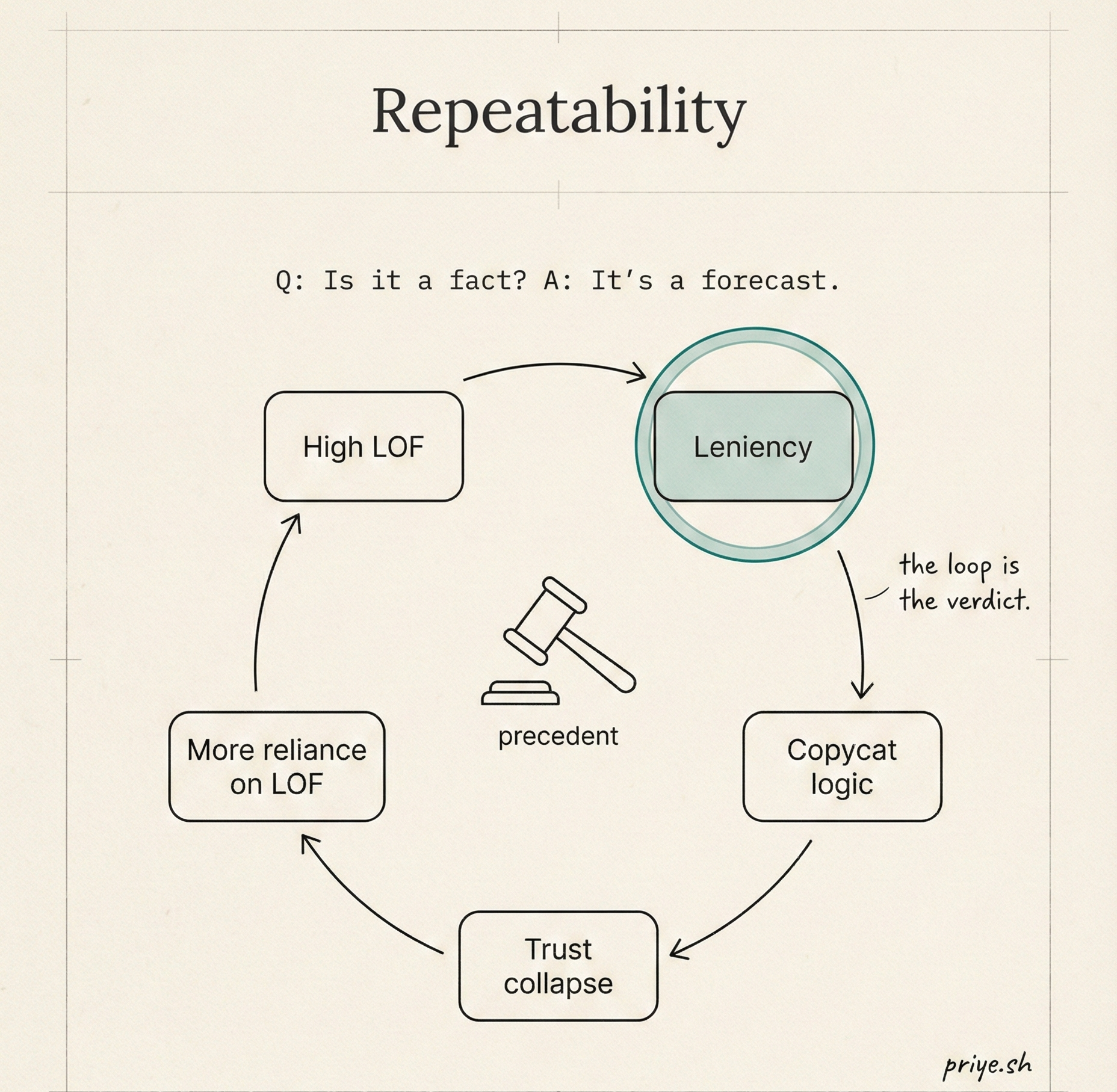
The story unfolds in a world where intelligent models have solved the Butterfly effect. In this world full of sensors, extensive real-time data collection pipelines, and abundant compute, we have created a model which can predict the lifetime output forecast (LOF - a proxy to value of life on economic contribution terms) of any individual.
The model does not give a single number but gives a probability distribution with uncertainty bands. It says that there is an 80% chance you will score a 80 on LOF. The remaining 20% is the long tail of possibilities. As a person ages and makes choices, the possibilities of their life reduce, and the model becomes more certain.
In this world, an eccentric scientist, Jay, solves an unsolvable conjecture, which is expected to change the fate of his downtrodden nation, drowning in debt and desperation. The model gives him 95% chance with an LOF score of 98. In terms of events, Jay mistakenly murders a 68-year-old McDonald's worker whose LOF score registered 6 with 98% certainty.
Should the jury accept LOF as evidence? Can justice work on a one-time exception, or does this become the new normal? With access to the right data points, do we choose a system where justice and rights are no longer standard?
Few snippets
Defense counsel doesn’t blink. “No, Your Honor. I’m asking you to admit what we already do in every other room. Insurance. Credit. Hiring. War. We price all day. I’m asking the court to stop pretending it doesn’t.”
The prosecutor laughs, once, like a cough. “You don’t price people ‘all day,’ counsel. You price risk. You price outcomes. You’re asking us to price personhood.
Juror Three taps the table. “We are not deciding a life. We are deciding a country.”
Juror Eight says, “No. We’re deciding whether the country gets to decide some lives don’t count.”
Juror Three rolls his eyes. “Don’t do the poetry thing. The model says the guy’s worth nothing.”
Juror Eight leans forward. “The model says he’s expected to be worth little in GDP. That’s not ‘nothing.’ That’s your brain trying to simplify a distribution into an excuse. Neither your brain nor the model can accurately tell us what the remaining 2% probability of his life could have been
If you imprison me, you are choosing a lower GDP trajectory for millions of citizens.”
The prosecutor steps closer. “And if you let him go,” she says, voice steady, “you are choosing a country where the price of killing is negotiable if your upside is high enough